
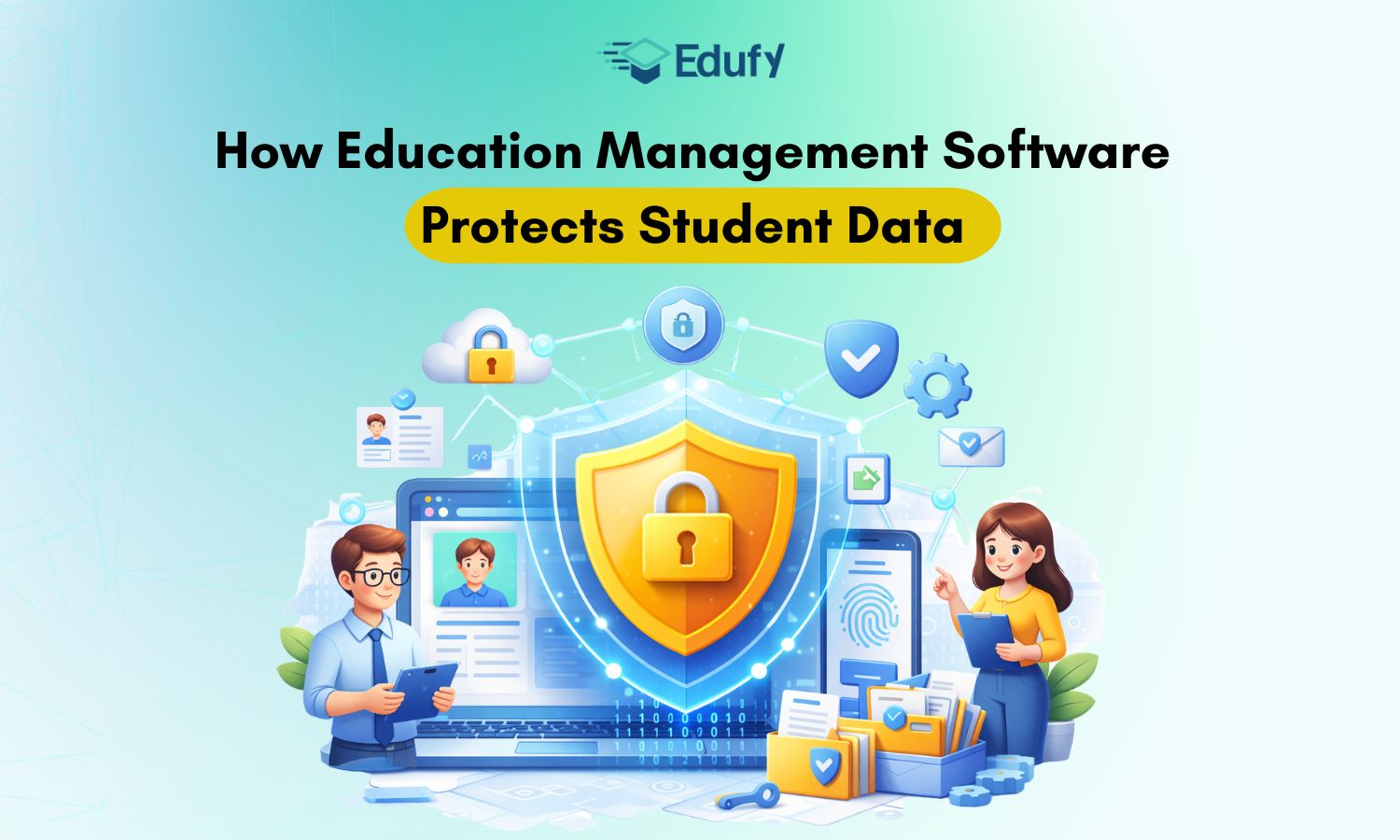
Education management software protects student data through strict access control, secure storage, and continuous monitoring.
Schools now store admissions, results, attendance, fees, staff details, and communication records in digital systems. This makes daily work faster. It also increases responsibility.
Student data is sensitive. It must stay private and accurate.
School leaders often worry about privacy, unauthorized access, and data leaks. A reliable system limits who can see information. It encrypts records. It keeps backups. It tracks user activity.
This article explains how modern education management software protects student data and what security standards schools should expect.
Student data is more than names and roll numbers. It includes academic results, personal details, guardian contacts, health notes, and payment history. If this information is exposed or changed incorrectly, the impact can affect students, parents, and the school’s reputation.
Common risks schools face:
Most data issues come from small daily mistakes, not complex hacking. A secure education management system reduces these risks by:
Before understanding protection, it helps to see where problems usually start.
In many schools, staff members have access to sections they do not need. Teachers can open finance records. Office staff can edit exam data. This increases the chance of errors and misuse.
Busy school days lead to mistakes. Marks get edited in the wrong class. Fee records are updated incorrectly. Without limits, these errors spread quickly.
Phones and laptops get lost or shared. If login security is weak, anyone using the device can open school data.
Some systems rely on local computers or manual file storage. When devices fail or data is deleted, recovery becomes difficult.
These risks often exist together. A strong EMS addresses all of them through layered protection.
Modern education management software protects student data through layered security. Access is restricted. Storage is secured. Activity is recorded. These controls work in the background so schools can operate without disruption.
Role based access ensures users only see what they are responsible for. Teachers manage academic records. Finance teams handle fees. Administrators oversee operations. Parents access only their child’s information. No role has full system visibility unless required. Edufy applies this structure based on real school responsibilities to prevent unnecessary exposure.
Strong systems use more than basic passwords. Additional verification such as OTP adds protection during login or sensitive actions. Even if login details are compromised, extra checks reduce unauthorized access. Edufy supports secure login methods that protect accounts without slowing daily work.
Student data is stored in encrypted form inside protected servers. This prevents direct reading of information even if someone attempts unauthorized access. Secure cloud hosting also protects against hardware failure, local device risks, and power issues. Schools do not need to manage physical servers.
Automatic backups create safe copies of data at scheduled intervals. If records are deleted or a technical issue occurs, information can be restored quickly. Edufy manages cloud backups so schools do not need manual intervention.
Audit logs record who accessed the system, what was changed, and when it happened. This creates accountability and reduces misuse. Administrators can review actions clearly instead of guessing.
Admission data is accessible only to authorized admission staff and administrators. Exam records remain limited to teachers and academic heads. Fee and payment information stays restricted to finance roles. Clear separation protects sensitive information during daily operations.
Payment gateways and messaging tools require strict permission control. Only approved users can process payments or send official communication. Financial actions and message logs remain traceable inside the system.
A weak system gives broad access and lacks tracking. A strong system limits visibility, encrypts storage, maintains backups, and records activity. Schools using structured platforms like Edufy face fewer risks and recover faster from issues.
When schools consider moving student data into software, a few concerns come up repeatedly. A well-designed EMS handles these issues quietly.
Restricted access limits exposure. Student records stay visible only to approved roles, which helps maintain parent trust.
Cloud backup protects data even if devices change or are lost. Mobile access allows staff to work without relying on one location.
Secure hosting and backups reduce long interruptions and data loss risks.
Student data protection depends on system design, not extra effort from staff. A secure education management system controls access, protects storage, keeps backups, and records activity in the background.
Schools that choose systems with proper safety measures reduce daily risks and build trust with parents and staff. Edufy applies these protections through clear role access, secure storage, reliable backups, and controlled integrations.
For schools planning long-term digital operations, protecting student data is a core requirement, not an optional feature.
Get personalized solutions from our dedicated team of specialists available 24/7. Start your journey to success today.
.jpg)
.jpg)